
What Future Innovations Will Disrupt Markets?
In today’s rapidly evolving world, innovation is the key to success. Companies that can anticipate and adapt to emerging trends and technologies are the ones that will thrive in the market. With advancements in artificial intelligence, robotics, and other disruptive technologies, the future holds immense potential for groundbreaking innovations that will reshape industries. In this article, we will explore some of the future innovations that are set to disrupt markets across various sectors.
1. Internet of Things (IoT) Revolutionizing Connectivity
The Internet of Things (IoT) is already transforming the way we live and work, and its impact is only expected to grow in the future. IoT refers to the network of interconnected devices that can communicate and share data with each other. This technology has the potential to revolutionize connectivity across industries such as healthcare, manufacturing, transportation, and agriculture. For instance, in healthcare, IoT devices can enable remote monitoring of patients, leading to more personalized and efficient healthcare services.
2. Artificial Intelligence (AI) Revolutionizing Decision-making
Artificial Intelligence (AI) has already made significant strides in various areas, including natural language processing, image recognition, and autonomous vehicles. In the future, AI is expected to revolutionize decision-making processes across industries. With the ability to analyze vast amounts of data and make predictions, AI-powered systems can enhance productivity, optimize resource allocation, and improve customer experiences. For example, in finance, AI algorithms can help identify investment opportunities and manage risks more effectively.
3. Robotics Transforming Automation
Robotics has been transforming industries for quite some time, but recent advancements in robotics technology are set to disrupt markets even further. With the development of more agile and intelligent robots, automation is becoming more accessible and cost-effective across industries. This trend is expected to streamline operations, reduce labor costs, and improve overall efficiency. For instance, in manufacturing, robots can handle repetitive tasks, allowing human workers to focus on more complex and creative tasks.
4. Blockchain Revolutionizing Trust
Blockchain technology, initially popularized by cryptocurrencies such as Bitcoin, has the potential to revolutionize trust and transparency across various sectors. By creating a decentralized and immutable ledger, blockchain enables secure and transparent transactions without the need for intermediaries. This technology has applications in finance, supply chain management, healthcare, and many other industries. For example, in supply chain management, blockchain can enable real-time tracking of goods, reducing fraud and ensuring the authenticity of products.
5. Augmented Reality (AR) Enhancing Experiences
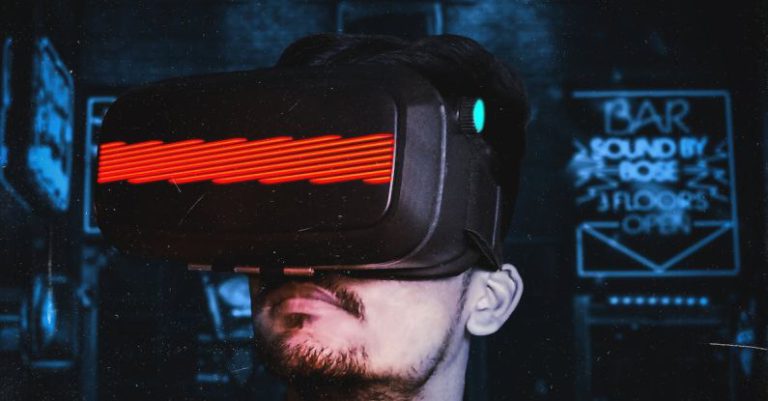
Augmented Reality (AR) has already gained popularity in gaming and entertainment, but its potential goes far beyond that. AR overlays digital information onto the real world, enhancing our experiences and interactions. In the future, AR can revolutionize industries such as retail, education, tourism, and healthcare. For instance, in retail, AR can enable virtual try-on of clothes, allowing customers to make more informed purchasing decisions.
6. Biotechnology Revolutionizing Healthcare
Advancements in biotechnology are set to revolutionize healthcare by enabling more personalized and effective treatments. With technologies such as gene editing and regenerative medicine, scientists are unlocking new possibilities for diagnosing and treating diseases. In the future, we can expect to see breakthroughs in areas such as precision medicine, organ transplantation, and genetic engineering. These advancements have the potential to significantly improve patient outcomes and reduce healthcare costs.
In conclusion, the future holds immense potential for disruptive innovations that will reshape markets across various sectors. From IoT and AI to robotics and blockchain, emerging technologies are set to transform connectivity, decision-making, automation, trust, experiences, and healthcare. To stay competitive in this fast-paced environment, companies need to embrace innovation and adapt to these future disruptions. By doing so, they can position themselves at the forefront of their industries and seize new growth opportunities.